news
What Utah’s 2025 Early Intervention Mandate Reveals About the Future of Policing Data
- TL;DR
- What do Utah’s SB124 Systems Track?
- What Triggers an Early Intervention System Alert, and What Gets Missed?
- How Can we Capture Community Feedback on Policing to Improve Utah SB124?
- So, What Happens When We Capture the Full Picture of Policing?
- What Utah SB124’s First Year Really Reveals
Signup for Updates
Share
TL;DR
- SB124 gave Utah agencies a strong, consistent foundation for tracking officer performance.
- Year one dashboards are quiet, which makes sense, most required inputs capture rare events like complaints or use-of-force reports.
- & While Quiet can be good, it also means these systems miss the daily routine interactions that shape trust, culture, and early support.
- Agencies that added post-contact feedback saw a fuller picture, moving from a few data points a month to steady insight from everyday community interactions.
- KYF believes the next step is simple: build on the law’s foundation by adding community feedback, so leaders can see the day-to-day reality, not just the rare events.
Table of Contents
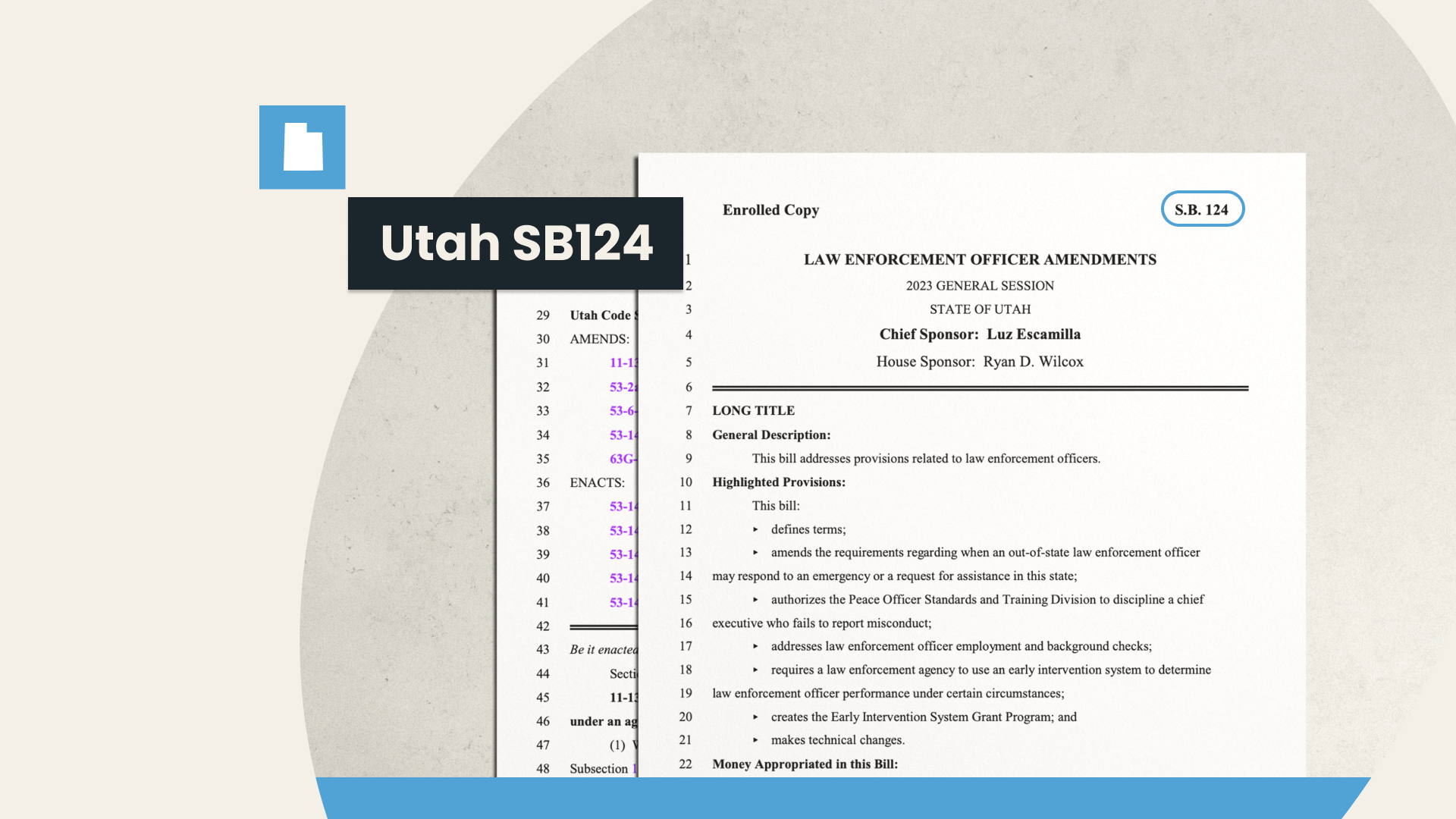
A year ago, Utah passed SB124 to make sure every agency had the same basic system for spotting early patterns and supporting officers sooner. It was meant to bring everyone onto the same page, and in that sense, it did exactly what it was supposed to do.
Most agencies picked a system, got it up and running, and folded it into their workflow. And once everything settled, something familiar happened: the dashboards were pretty quiet. Not many alerts, not a lot of activity. Maybe two to five things a month, if that.
And honestly? That feels like a good sign.
When the data you’re collecting is mostly tied to things you don’t want, complaints, use-of-force reports, internal reviews, quiet feels reassuring.
But that quiet also led to a bigger question:
What is the system actually showing us day to day… and what isn’t it showing at all?
That’s where the conversation really begins.
What do Utah’s SB124 Systems Track?
Once you start looking a little closer at how most agencies are set up with their SB124 system in year one, the quiet dashboards make sense. Almost every system, no matter the vendor, pulls from the same small set of inputs.
- Complaints & Commendations
- Use-of-Force Reports
- Internal Reviews
- Pursuits, Crashes or Injury Reports
- Training or Policy-Related Flags
These are important signals. They absolutely belong in an early-intervention system (EIS) framework. But they’re also the kinds of things that don’t happen very often, especially in most Utah communities where major incidents are rare and formal complaints aren’t common.
So the system ends up showing exactly what it’s designed to capture: unfortunately not much.
A lot of agencies told us the same thing during year one: they’d see tow or three reportable items in a month. Maybe a handful on a busy month. And when a system only pulls from rare events, a quiet dashboard doesn’t necessarily mean things are calm, it just means the input stream is limited to rare events.
And that creates a predictable gap. You see the big moments, but you miss the everyday ones.
And from our conversations and the data, the everyday interactions are where most policing actually happens: the conversations, the quick resolutions, the calls that don’t end in a report but still shape how people experience their department.
That’s where trust builds, where tone is set, where early support needs to show up, and where trends start LONG before they ever hit a complaint or use-of-force threshold.
That’s why most leaders across the state are starting to look beyond incident-driven data. Not to replace the required inputs, those matter and we are incredibly grateful Utah leadership has put them in place.
But it’s time to add visibility in the places where the system is naturally quiet. Those gaps make all the difference.
What Triggers an Early Intervention System Alert, and What Gets Missed?
It helps to look at two calls from the same officer on the same shift.
Call #1 - The Type of Event that WOULD trigger an EIS Alert
A domestic disturbance turns physical. The officer has to physically detain someone who refuses to comply. A use-of-force report is filed. Supervisors are alerted by EIS and review.
Every EIS system in Utah logs this. It’s serious, it’s documented, and it fits perfectly into SB124 required inputs. This is the kind of event these systems exist to catch.
Call #2 - The Type of Event that Would NEVER Trigger and EIS Alert
Later that shift, the same officer stops a driver for a broken tail light. The officer isn’t blatantly rude, but they are short when explaining the laws. Maybe using a rushed, clipped tone and answering questions mechanically instead of empathetically. The driver leaves with a ticket feeling embarrassed, confused, and a little frustrated.
Nothing will rise to the level of complaint here. There will be no report, no policy violation, no harm done: technically.
But that driver leaves with a little less humanity for officers, that tiny dip in trust accumulates over time. It’s how the common narrative of ‘cops with attitude’ forms, not through big incidents but through hundreds of small tone moments that no EIS system ever captures.
And for the officer involved that tone slips is signaling something else: early stress, fatigue, frustration, or workload pressure that hasn’t shown up anywhere else yet. From our conversations with officers, they say it’s easy to miss these signs themselves. These are the kind of small patterns that can trigger a bigger blow up down the road.
How Can we Capture Community Feedback on Policing to Improve Utah SB124?
So if EIS isn’t picking this up, what can? You may have heard of community feedback programs, things like broad survey tools, public comment forms, or annual perception reports. We found the solution to this question in taking it a step further. Post-Contact Feedback.
An NIJ backed approach that asks community members for quick, direct feedback right AFTER an interaction with an officer, not weeks or months later. And because it’s tied to a specific encounter, it captures all the small moments like tone, clarity, professionalism.
When Chief Deputy Cade Palmer started reviewing community feedback patterns within Box Elder County, one of the first things he noticed was a trend involving one of his own deputies. The comments weren’t about him being rude or unprofessional even, they were using words like ‘rushed’, ‘short’ or ‘overwhelmed’ during otherwise routine calls.
Something he would never have seen relying on EIS alone.
His team began to look deeper, comparing those comments to body-cam front he same time-frame, and a fuller picture began to appear. Just like the example we shared earlier, the deputy wasn’t doing anything objectively wrong, he was simple carrying the emotional weight of back-to-back high stakes calls bleeding into smaller routine stops. A felony-level case followed by a traffic stop.
They immediately stepped in and offered the officer support. His tone improved, his had tools to ease his stress and a clear path to communicating with his leadership.
What could snowballed into a career derailing moment was addressed early, and now that officer has a smoother path to retiring at that agency. Average tenure for officers is only 1-2 years nationwide (Bureau of Labor Statistics) and some cities have a whopping 20% average separations rate for officers each year.

So, What Happens When We Capture the Full Picture of Policing?
In the last five years, Know Your Force has been helping agencies use post-contact feedback, we’ve seen the same pattern repeat across departments of every size. The minute everyday interactions become visible, leaders can spot issues early on, support officers sooner, and celebrate the quiet wins that rarely appear anywhere else, exactly like what happened in Box Elder.
And because these moments are happening constantly, the volume looks completely different too. Agencies using post-contact feedback reliably gather 30-50 community responses a month, that can be dozens everyday, instead of the 2-5 formal reports monthly that came through incident-driven systems. Most of this feedback comes from simple, routine interactions.
We prompt these by having an officer hand out a small business card with a QR Code survey attached, asking for a quick minute of feedback. We believe that small act changes everything. Instead of communities only speaking when something goes wrong, they share what’s working and the day-to-day reality of policing that’s never been catalogued before.
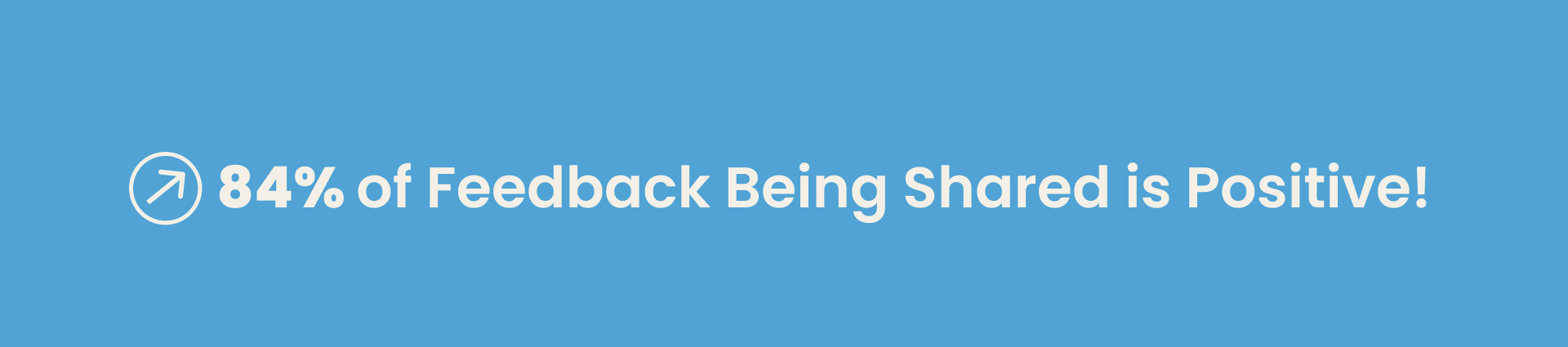
And the best surprise of all has been the overwhelming positivity. 80-88% of feedback from the public is positive, often focusing on those tone pieces we discussed.
What you get is a fuller picture: early support needs surface quickly, quiet wins are recognized, trends become visible in days instead of months, and leaders finally see the reality of policy that happens between the big, rare events SB124 was designed to track.

What Utah SB124’s First Year Really Reveals
Utah’s Early Intervention Mandate did exactly what it was designed to do: it created a consistent state-wide foundation for tracking significant events across every agency. Year one confirmed the structure is in place and working. The serious incidents surface. The thresholds trigger. The reporting is aligned.
But year one also shows the natural limits of an early intervention system that relies only on rare data points. When the inputs are complaints, use-of-force reports, and critical incidents the picture will always reflect those same rare events, not the often positive daily reality.
That’s where the next step becomes clear. We need to build on SB124’s foundation with community fueled, high-frequency input. Agencies across Utah are finding the most important moments outside the data SB124 requires, they are finding it in Post-Contact Feedback.
With a fuller picture of policing, trends emerge in days not months, officers receive support sooner and the community sees itself reflected in the data.
SB124 was the structure, 2026 is where Post Contact Feedback completes it. The future of policing includes our community voices.
If year one of SB124 left you wanting a fuller picture, you’re not alone. Agencies across Utah are already adding community feedback to complete their early intervention system. If you’re ready to explore what that looks like, strike up a conversion with our founder, Scott Lowry at [email protected]